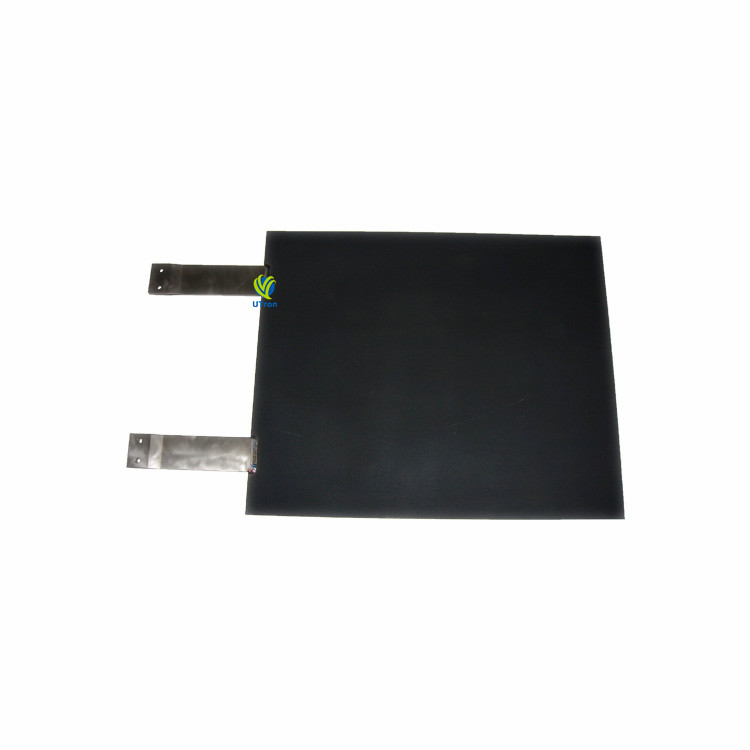
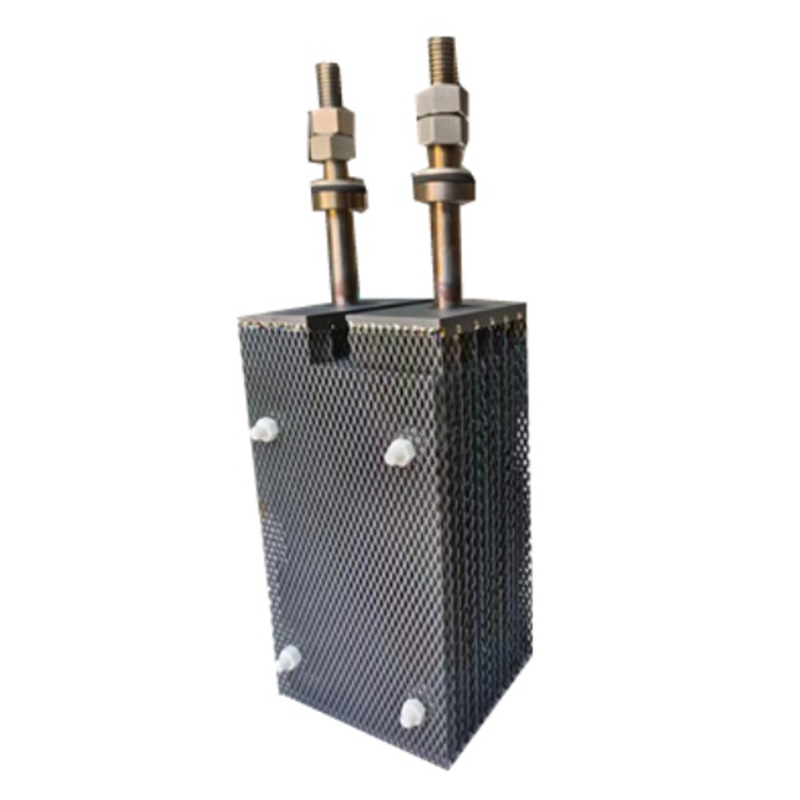
UTron had developed an innovative Mixed Metal Oxide Anodes for Electrochemical Ammonia Removal by thermal decomposition method. The electrocatalytic layers of this mixed metal oxide anode are composed of a mixture of noble and valve metal oxides, such as ruthenium, iridium, platinum, etc. It performs high oxidizability of removal rate of NH 3 -N increases with the amount of NaCl and current density and long service life.
Parameter:
Anode Substrate: Titanium in Grade 1 or 2;
Anode Coating: Ruthenium, iridium, platinum and other pt group noble metal;
Voltage: <5V;
pH: 7 -11;
Temperature:25- 55 °C;
Current Density: 20 mA/cm 2;
Service Life: 3-5 Years.
Features:
High degradation efficiency;
Long service time;
Low cost comparing with BDD anode;
Lower and constant cell voltage;
Lower inter-electrode gap;
Less cell byproduct.
Application:
Wastewater treatment;
Swimming Pool Chlorination;
Seawater Electro Chlorination;
Metal recovery;
Printed Circuit Board (PCB) plating;
Impressed Current Cathodic Protection.