
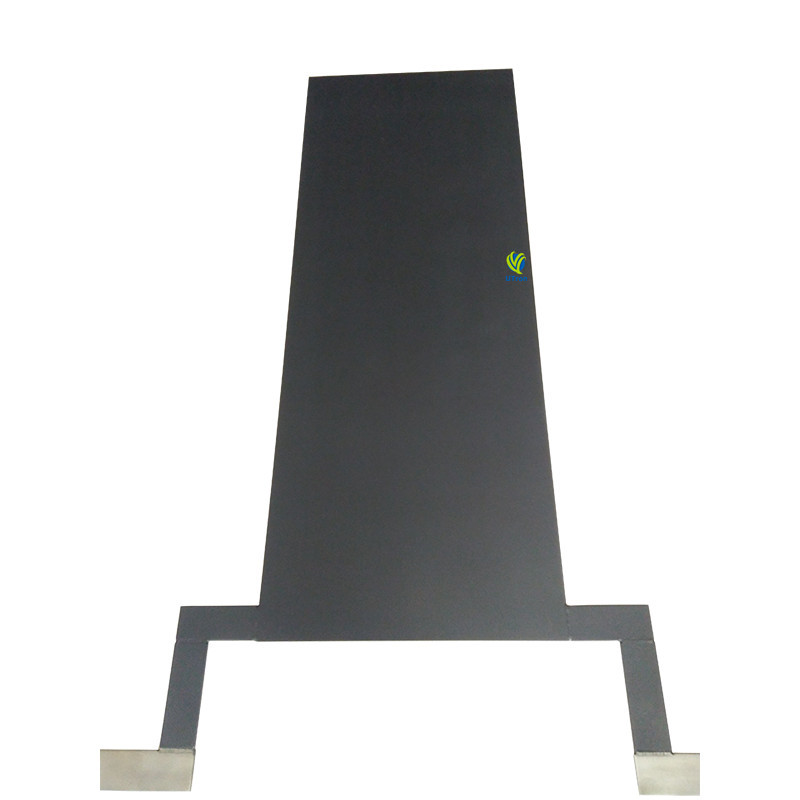
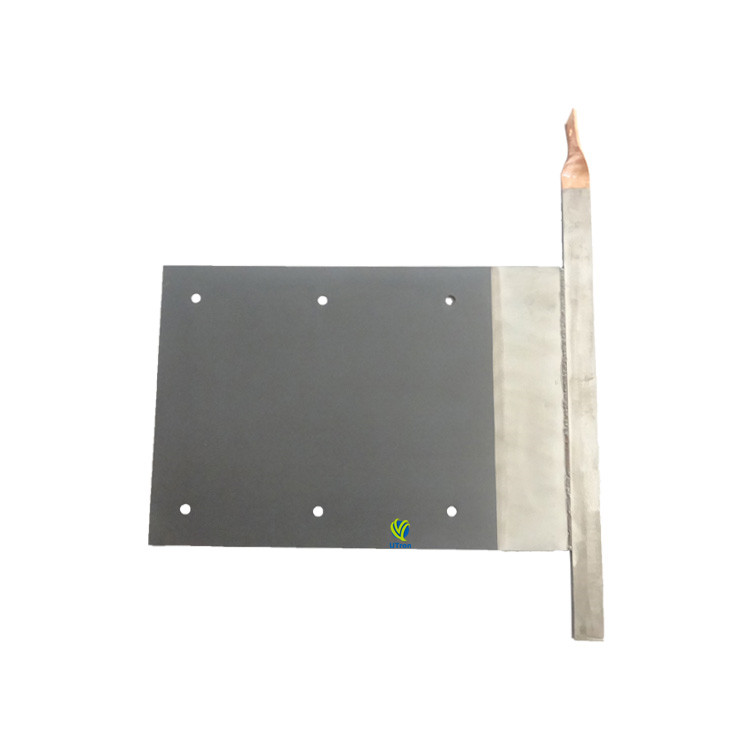
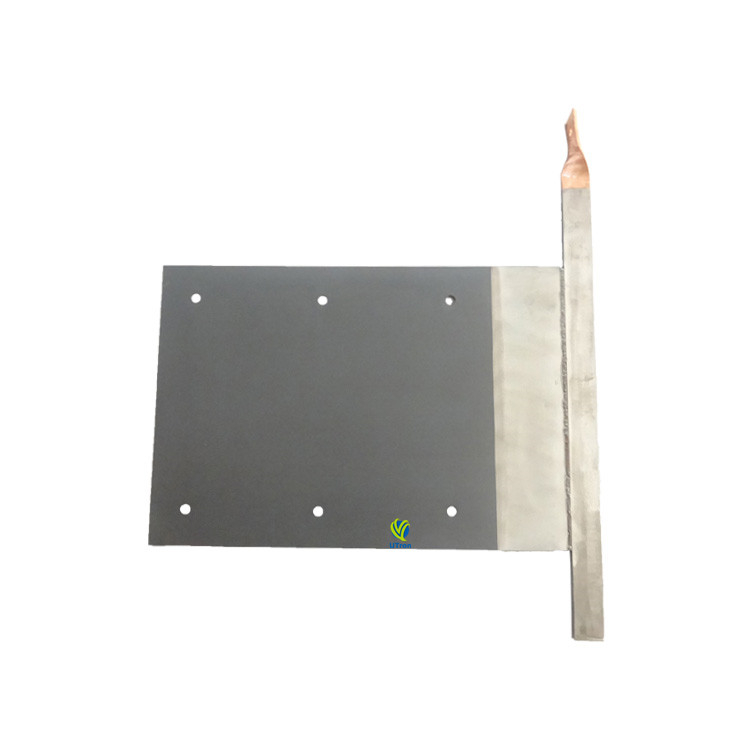

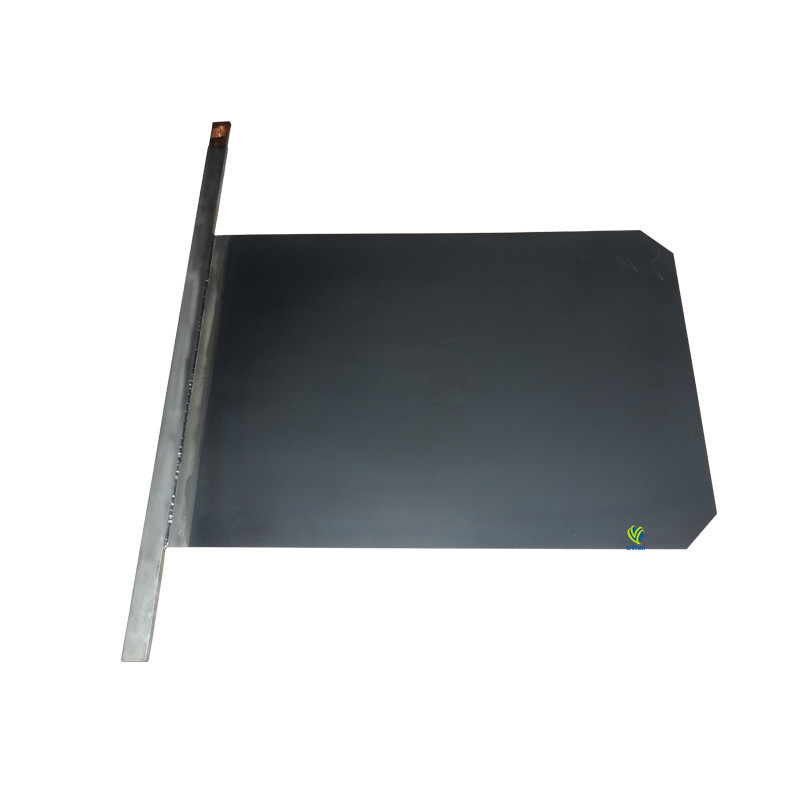
Conventional lead silver alloys are predominantly used in the zinc electrowinning, due to their cost efficiency and long-term stability at high current densities and in aggressive environments; however, their drawbacks include high over potential and the possibility of cathode contamination are worth considering. The Oxide Coated Catalytic Anodes are considered to improve cathodic zinc purity and decrease cell voltage during zinc electrowinning. Considering the Ti substrate and its coatings such as IrO2 and Ta2O5 coatings, the composites of OCAs have low over potentials 400–500 mV less than Pb-Ag anode.
AUE has designed a novel mixed metal oxide coated titanium anode comprising Nano iridium ruthenium oxide in combination with amorphous tantalum oxide matrix for zinc electro winning, in which the anodic reaction is oxygen evolution in acidic solutions. This coated titanium anode observably lower cell voltage, and the anodic deposition of MnOOH or CoOOH known as the unwanted side reaction of zinc electrowinning can be also suppressed on the amorphous IrO2 based or RuO2 based coating.
Prameters of MMO Coated Titanium Anode for Zinc Electrowinng Cell
Anode Material: Titanium;
Coating: iridium, tantalum, ruthenium, + X
Advantages:
Low cell voltage;
Clean operation;
Less by products;
Longer operating life;
Energy saving.
Applications:
Electro winning of copper, cobalt, nickel, chromium, zinc and other metals;
Electro winning Pilot Plant;
Metal recovery from waste water systems;
The electrolytic cell for nickel electrowinninig contains a fairly high amount of chloride and will therefore require an electrode that is resistant to chlorine attack, as chlorine will be evolved at the anode. The complicating factor here is also the production of oxygen at the anode too. Most materials are resistant to either chlorine or oxygen, but not both, or at least not well. For this reason, inert or insoluble catalyst coated anodes applied on an inert substrate. Usually, the best bet is to use a layered inert anode material. The chlorine attack usually occurs on the substrate itself, so it should either have high chlorine over potential, it can be titanium (or tantalum) with a small layer of platinum electroplated to it. Then, the electrode substrate can be coated with an oxygen evolving catalyst, such as iridium dioxide or similar coatings. An excellent lifetime will be obtained in most of application, however care must be exercised not to allow the electrode to be cathodic, or the coating will be quickly lost.
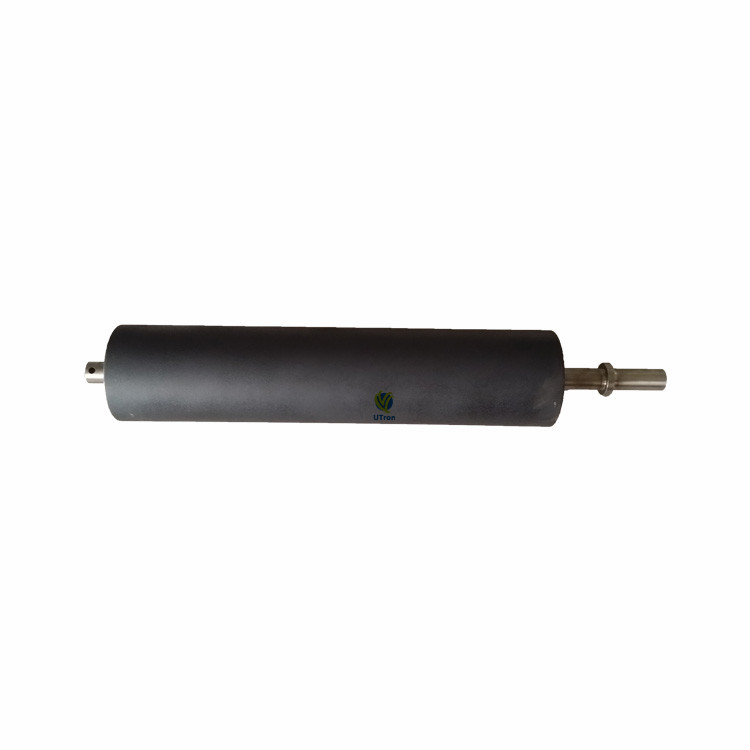
Cylindrical electrowinning cell designs have been shown to significantly enhance mass transfer owing to high flow rates and a unique spiral flow within the cell.It proven to the advantages of increasing production capacity, reduction footprint, enhancing selectivity and recovery from lower concentrations than conventional technology. This technology has been widely employed in copper, zinc, nickel, cobalt electrowinning.
The electrolytic cell for nickel electrowinninig contains a fairly high amount of chloride and will therefore require an electrode that is resistant to chlorine attack, as chlorine will be evolved at the anode. The complicating factor here is also the production of oxygen at the anode too. Most materials are resistant to either chlorine or oxygen, but not both, or at least not well. For this reason, inert or insoluble catalyst coated anodes applied on an inert substrate. Usually, the best bet is to use a layered inert anode material. The chlorine attack usually occurs on the substrate itself, so it should either have high chlorine over potential, it can be titanium (or tantalum) with a small layer of platinum electroplated to it. Then, the electrode substrate can be coated with an oxygen evolving catalyst, such as iridium dioxide or similar coatings. An excellent lifetime will be obtained in most of application, however care must be exercised not to allow the electrode to be cathodic, or the coating will be quickly lost.
