
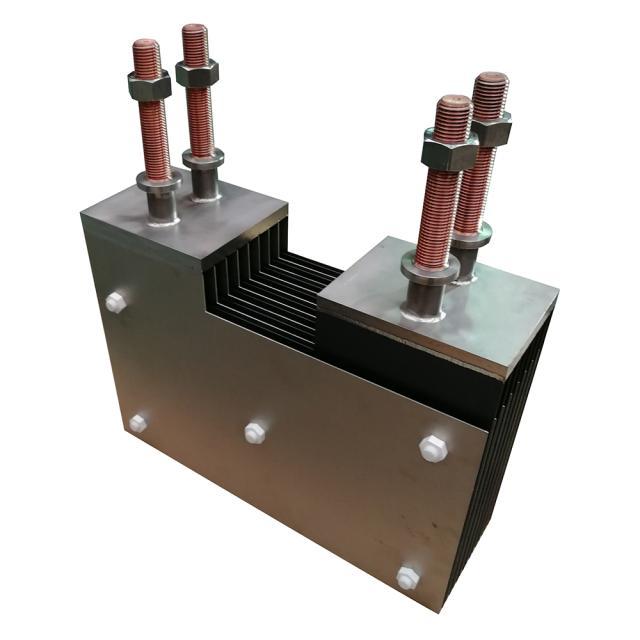
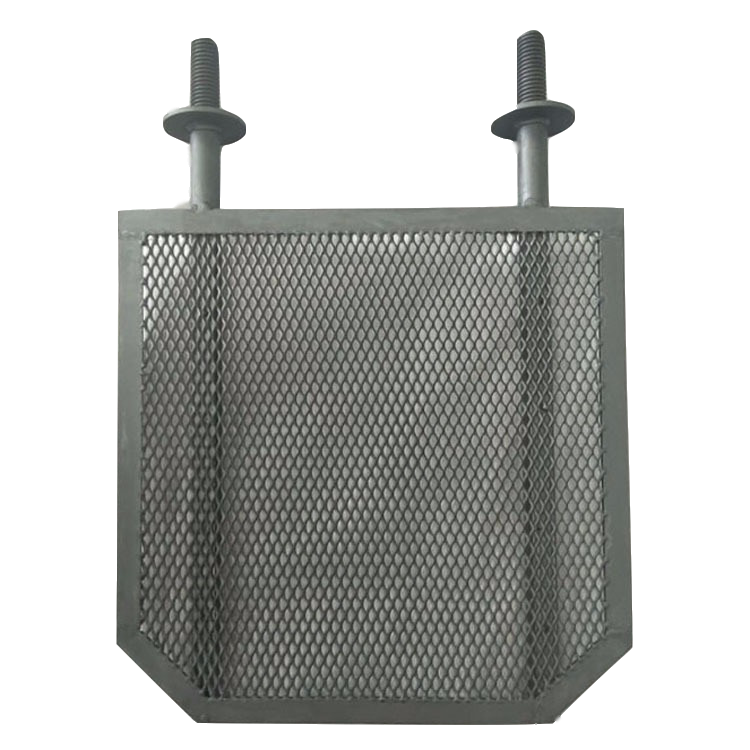
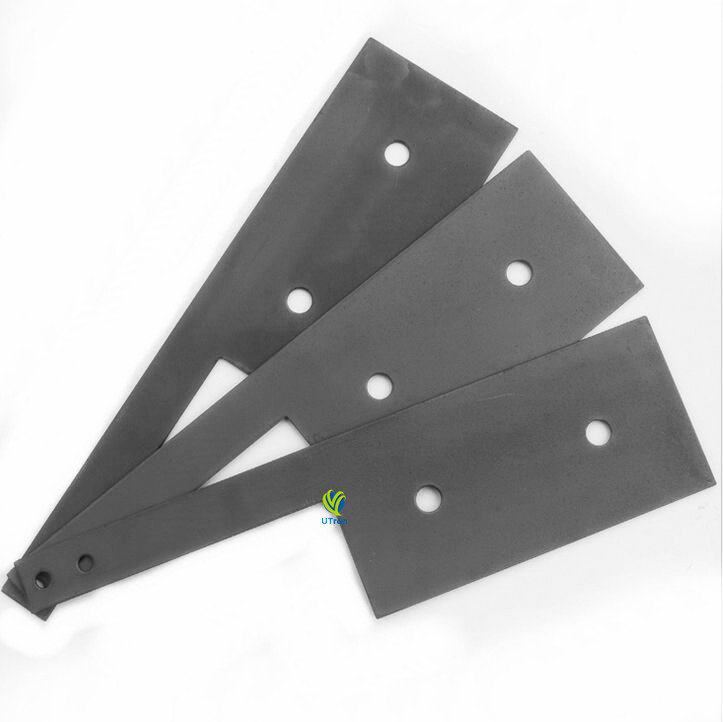
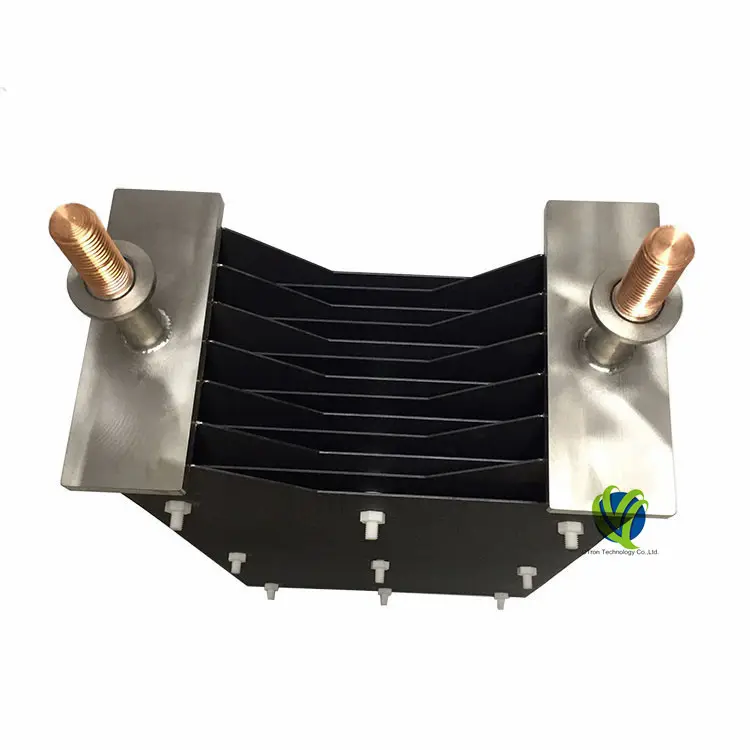
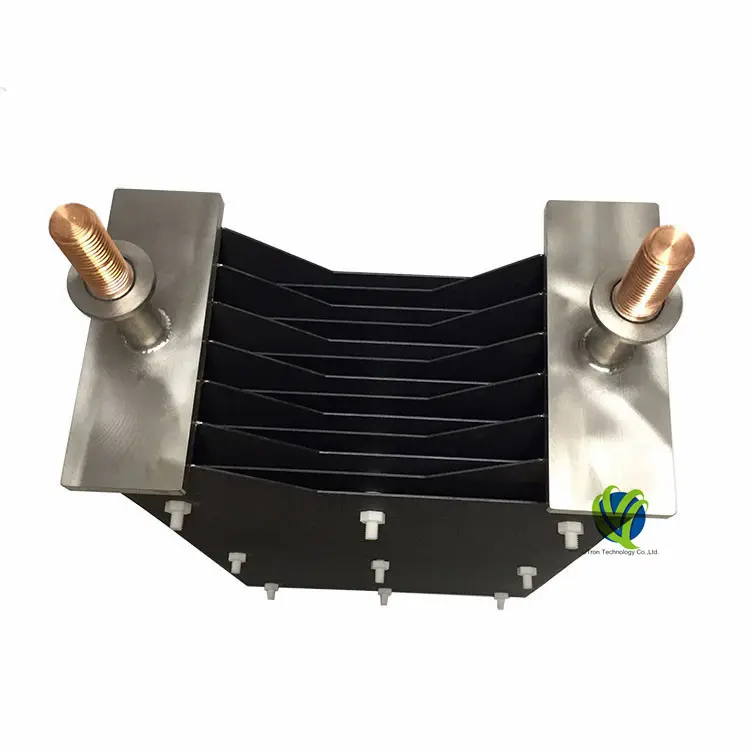
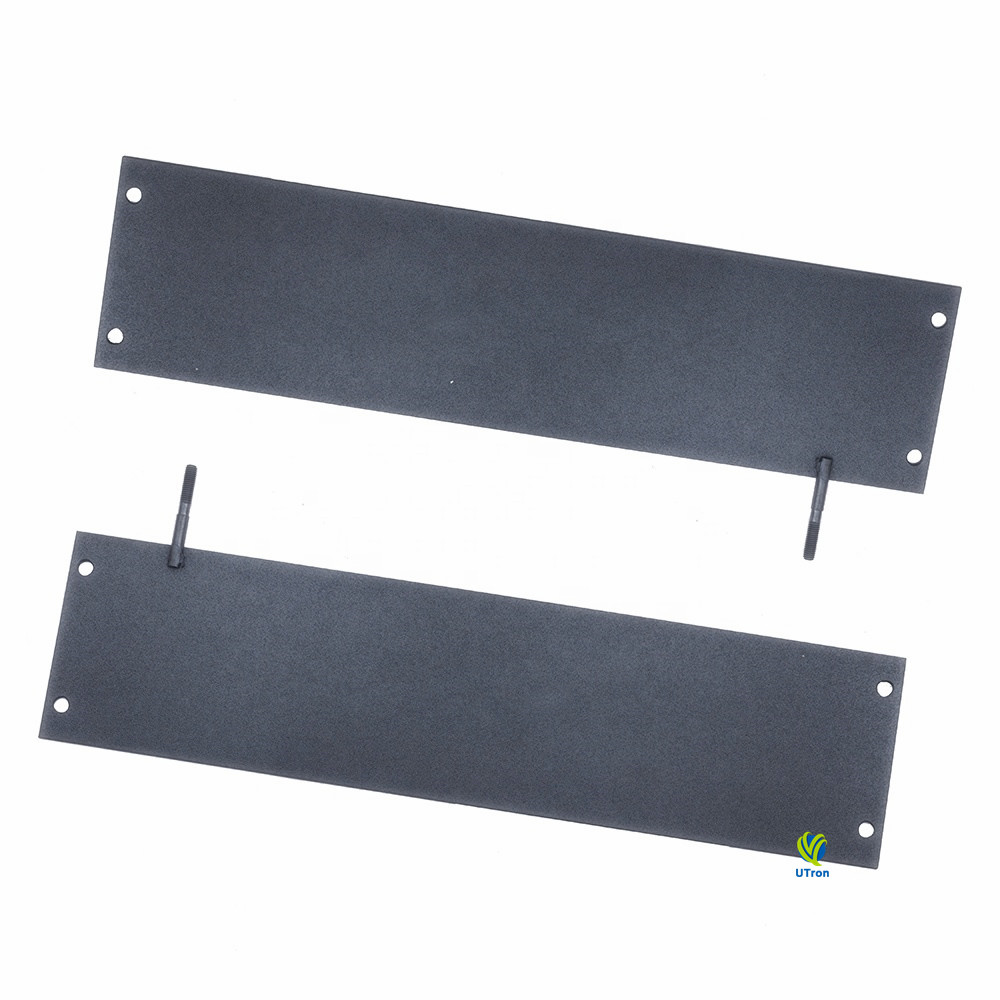
Titanium Electrode for Electrochemical water treatment

Electrochemical processes are considered a very effective method for decolorization and decontamination of wastewater from textile and dyes industries. The electrode is a crucial part of the electrochemical process. The right choice of an electrode material makes the process very effective and improves its efficiency because the mechanism driven by the process as well as the degradation product depends upon the anode material. High efficiency and high stability are the most desirable properties of electrodes.
Mixed metal oxide (MMO) coated titanium electrodes are titanium based electrodes containing conductive metal oxide coating. These electrodes have some desirable properties such as high surface area, high electrical and mechanical strength and excellent electro-catalytic properties and performed good oxidation of pollutants.
 

UTron manufacture Titanium Electrode for Electrochemical water treatment which adopts precious metals such as ruthenium, iridium, platinum, etc brush coated on titanium substrate and sintered. It has been proven to be effective for the degradation and decolorization of organic pollutants.
Parameter:
Electrode material: Titanium in Grade 1;
Coating: MMO(RuO2+IrO2+Platin+X);
Feature:
Strong oxidation capability;
Effective degradation and decolorization capacity;
Long lifespan;
Nanoscale coating with better durability and adhesion;
Custom service available.

Application:
Industrial effluent electrochemical treatment;
Electrochemical ammonia removal;
Landfill leachate electrochemical treatment;
Paper wastewater electrochemical treatment;
Advanced oxidation process.

Related Products

Tianium mesh Anode with Ruthenium Oxide Coated for Electrooxidation Pharmaceutical Effluent

Tianium mesh Anode with Ruthenium Oxide Coated for Electrooxidation Pharmaceutical Effluent

Pharmaceutical industry effluents are usually characterized by high BOD and COD, which are highly toxic to biological life. Electrooxidation, which relies on the generation of very reactive hydroxyl radicals has been used to decontaminate pharmaceutical wastewater and has proven to be an effective manner.

Ruthenium Iridium Coated Titanium Anode for Electrochemical Treatment of Landfill Leachate

Ruthenium Iridium Coated Titanium Anode for Electrochemical Treatment of Landfill Leachate

The treatment of landfill leachate by electrochemical oxidation advanced oxidation processes (AOPs) has been reported as one of the most effective methods to degrade a variety of refractory compounds in landfill leachate. In electrochemical oxidation, employing different types of anode materials plays a dominant role, and substantially influences both reaction selectivity and efficiency. UTron had developed ruthenium iridium coated titanium anode for electrochemical treatment of landfill leachate. This RuO2 and IrO2 coated titanium anode (Ti/RuO2-IrO2) possesses high stability and catalytic activity. It was found to have an excellent removal performance for COD, NH3-N, color, and heavy metals in landfill leachate, and could effectively reduce the contaminant loading of these effluents and enhance biodegradability.

Titanium anodes with Iridium Oxide Coating for Electrochemical Degradation of Organic Pollutants

Titanium anodes with Iridium Oxide Coating for Electrochemical Degradation of Organic Pollutants

Titanium anodes with Iridium Oxide Coating for Electrochemical Degradation of Organic Pollutants: Electrochemical oxidation is an effective method to treat high-concentration wastewater, it can degrade complex organic pollutants in wastewater into non-toxic small molecular organic compounds or carbon dioxide and water through mineralization of various organic pollutants.

Titanium anodes with Iridium Oxide Coating for Electrochemical Degradation of Organic Pollutants

Titanium anodes with Iridium Oxide Coating for Electrochemical Degradation of Organic Pollutants

Titanium anodes with Iridium Oxide Coating for Electrochemical Degradation of Organic Pollutants: Electrochemical oxidation is an effective method to treat high-concentration wastewater, it can degrade complex organic pollutants in wastewater into non-toxic small molecular organic compounds or carbon dioxide and water through mineralization of various organic pollutants. In the electrocatalytic oxidation process, different electrode materials behaviors various efficiency. Choosing an appropriate electrode material is an effective way to improve the efficiency of the electrochemical degradation result. Dimensionally stable anode (DSA) has good stability and catalytic activity and has been widely used. It is a kind of noble metal oxides (such as RuO2 and IrO2) with strong corrosion resistance and high stability coated on the titanium. This electrode has the advantages of high oxygen evolution potential, low cost, and easy operation, AUE manufacture a nanocrystal iridium oxide coated titanium anodes for electrochemical degradation of organic pollutants by thermal decomposition method, which shows high chemical oxygen demand (COD) removal rate and efficient degradation result.

0
Inquire for more cooperation or product information.
We will contact you within 1 working day, please check your email.
Titanium Electrode for Electrochemical water treatment
Name
Mail
Mobile phone
Message

Send

AUE

Welcome to the official AUE website
Welcome to the official AUE website. Please provide your contact details—including your WhatsApp number and email address—and our engineers will get in touch with you shortly.

Start Chat with: