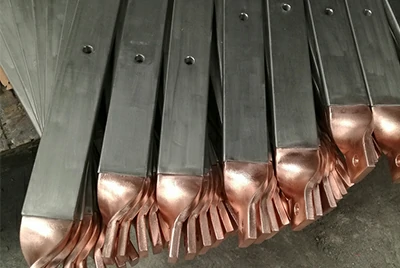
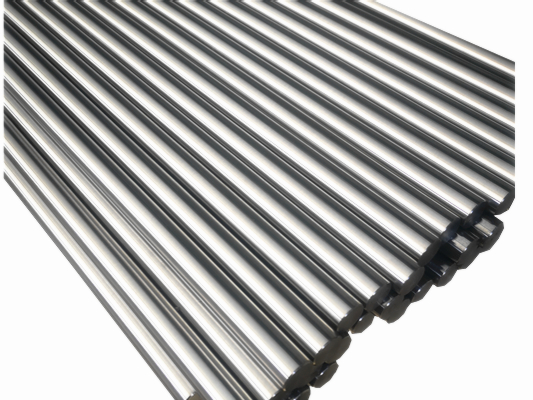
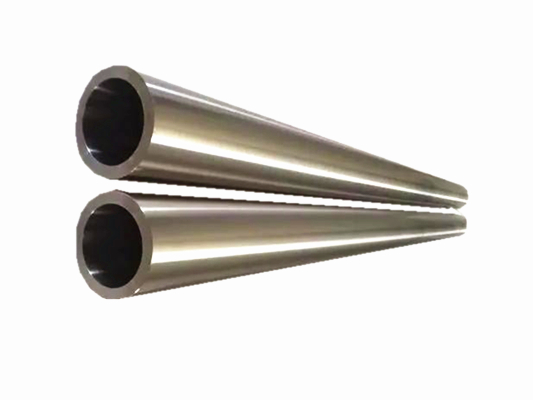
We supply a full range of titanium clad bar, plate, tube, and wire with cladding thickness of 1.0–3.0 mm (customized thicker options available). End sealing, slot machining, and long busbar customization are also supported.
All products undergo dimensional inspection, cladding thickness measurement, and necessary UT/NDT testing before delivery. EN 10204 3.1 certificates are provided with each shipment.
Why choose titanium clad copper
- Copper core ensures excellent conductivity, reducing power loss and hot spots
- Titanium layer resists acids, alkalis, and chlorides, remaining stable even at liquid surfaces and spray zones.
- Fewer replacements and less downtime make the overall TCO more cost-effective than pure copper, stainless steel, or pure titanium.
- Available in round, square, rectangular, or custom cross-sections; cladding thickness, end sealing, slotting, and drilling can be processed on request.
- Inspection and certificates provided (such as UT, shear/peel strength, cladding-thickness map, EN 10204 3.1) for easy verification and traceability.
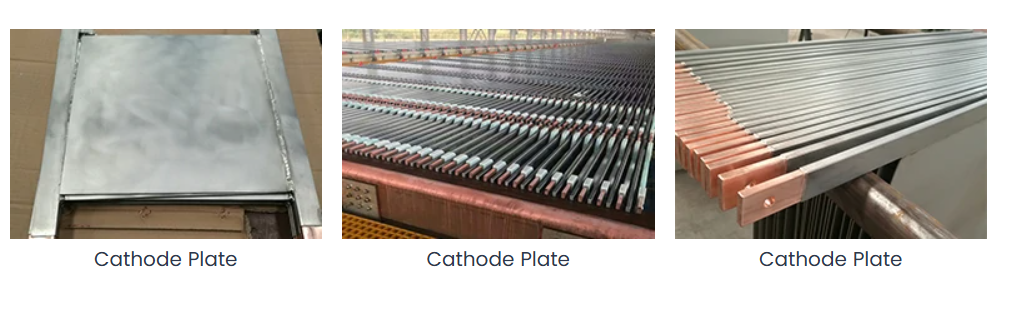
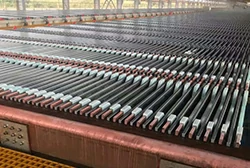
Titanium clad copper cathode plates are designed for cathode backplates, current distribution plates, and electrode frames in highly corrosive electrochemical environments.
The copper core provides low voltage drop and uniform current paths, while the titanium layer offers long-term resistance to chlorides, acids, alkalis, and seawater.
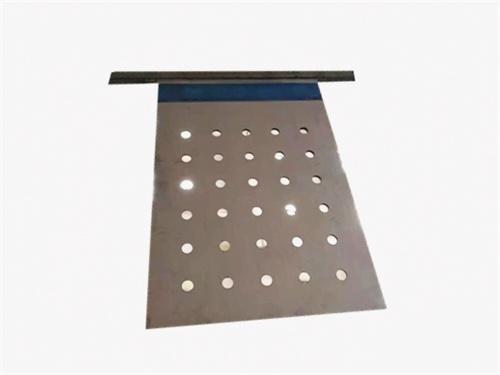
Explosive bonding or roll bonding creates metallurgical bonding with high strength, preventing delamination and supporting large sizes and complex perforations.
- Wide, long, and heavy plates available, reducing joints and hot spots.
- Supports drilling, slotting, beveling, stud welding, and titanium edge sealing to prevent copper exposure.
- UT, shear/peel tests, cladding-thickness maps, and EN 10204 3.1 certificates are provided.
- Standard: ASTM B898 (clad plate)
| Cladding(Ti) | 0.6–4.0 mm |
|---|
| Copper core | ≥8 mm |
| Maximum width | 3600 mm |
| Maximum length | 16000 mm |
| Forms | Flat plate, ribbed plate, window/slot plate, welded frame plate |
![]()
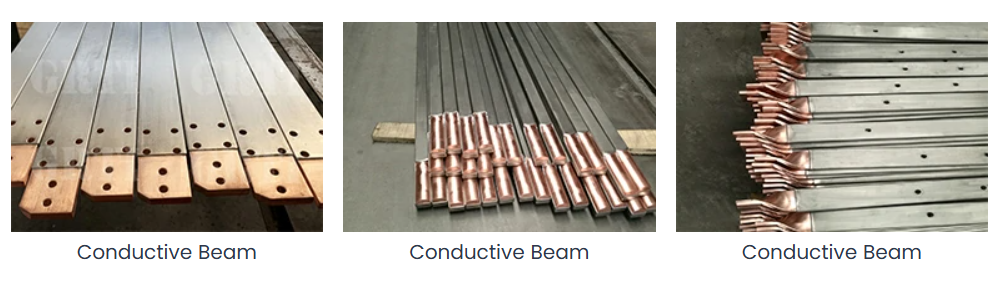
Titanium clad copper conductive beam
The two metals are firmly bonded together through special processes (explosive bonding or roll bonding), allowing the beam to bear loads and operate reliably for many years in humid and corrosive environments.
| Thickness | 10–30 mm |
|---|
| Width | 50–150 mm |
| Titanium cladding thickness | 1.0–3.0 mm |
| Core material | Cu C11000/C10200 |
| Length | Single piece ≤ 9–12 m |
| Processing | drilling, slotting, beveling; titanium end-caps / weld seals; polished contact surfaces |
- High-current long-distance power supply reduces hot spots.
- Stable in liquid, spray, and splash zones, with less downtime and better TCO.
- Meets deflection and straightness requirements for span and fixture loads.
- Titanium end-caps or seals in wet zones; holes, slots, and contact surfaces processed as required.
- Compatible with Ti-to-Ti clamps/shoes, insulating sleeves, lifting points, and lugs for easy on-site installation and maintenance.
![]()