Inside the Factory: What a Titanium Anode Factory Tour Actually Shows You
By the Xi'an AUE Technology technical team · Last updated: 11 November 2026 · Reading time: about 9 minutes
Short answer: a factory tour of a coated titanium anode plant is a supplier evaluation, not a sightseeing visit. It is the only stage where you can see the three things that decide whether an electrode survives its design life — how the titanium substrate is accepted, how much catalyst is loaded onto it in g/m², and how that loading is verified before shipment. At AUE's 20,000 m² plant in Xi'an, the walk-through follows six stages: substrate intake, surface preparation, coating application, thermal decomposition and sintering, batch verification, then cell assembly and re-coating.
Key facts
| Item | Detail |
|---|
| Company | Xi'an AUE Technology Co., Ltd. (AUE), manufacturer of electrocatalytic titanium electrodes and electrochemical equipment |
|---|
| Experience | More than 21 years in electrochemical electrode materials |
|---|
| Plant | 20,000 m² with separate coating, sintering, cell-assembly and metal-fabrication lines |
|---|
| Factory address | No. 1688 Hanhui Avenue, Qinhan New City, Xixian New Area, Shaanxi, China |
|---|
| Coating systems in production | Ruthenium-iridium (RuO₂/IrO₂), iridium-tantalum (IrO₂/Ta₂O₅), platinum on titanium, lead dioxide on titanium |
|---|
| Substrate standards | ASTM B338 Grade 1 or 2 (tube); ASTM B265 Grade 1 (sheet and mesh), each with a mill certificate |
|---|
| Verification | Coating loading by mass (g/m²), 180° bend adhesion test, accelerated life to NACE TM0108 and ISO 19097, X-ray coating integrity |
|---|
| Quality system | ISO 9001 |
|---|
| Customers | More than 5,600 clients in over 120 countries
|
|---|
On this page
- The six stages you will walk through
- Stage 1: substrate intake
- Stage 2: surface preparation
- Stage 3: coating application and the loading number
- Stage 4: thermal decomposition and sintering
- Stage 5: batch verification
- Stage 6: cell assembly and re-coating
- What a tour cannot tell you
- Six questions to ask at any anode factory
- Arranging a visit
- FAQ
The six stages you will walk through
A coated titanium anode is a titanium substrate carrying a thin, electroactive noble-metal oxide layer. The substrate carries current and never dissolves; the coating decides which reaction runs, at what overpotential, and for how many ampere-hours. Every stage on the tour exists to protect one of those two facts.
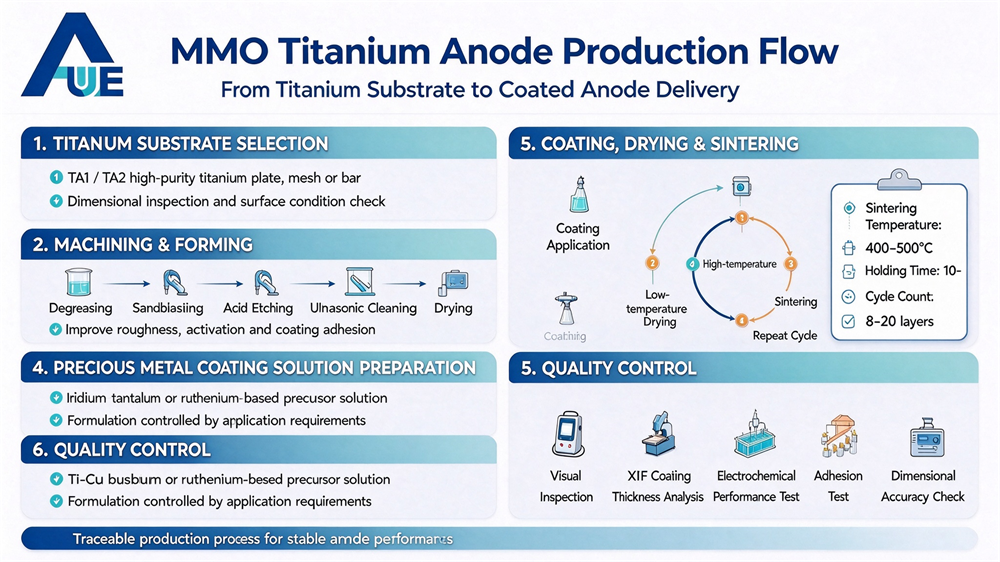
Figure 1 shows the sequence as it is laid out on the shop floor, with the quality gate attached to each stage.
![]()
![]()
Figure 1: Production flow for coated titanium anodes at AUE, Xi'an. The verification step is a gate, not a final inspection — a batch that fails loading, adhesion or life testing is not released.
Stage 1: substrate intake — the tour starts at goods-in, not at the coating line
The first thing a buyer is shown at a serious plant is usually the least photogenic: incoming titanium and its paperwork. Grade and chemistry are not cosmetic details. A lower grade will coat acceptably and then fail early, because coating adhesion depends on the substrate surface and its alloy content as much as on the oxide itself.
At AUE, tubular anodes are made from ASTM B338 Grade 1 or Grade 2 titanium, and plate, sheet and mesh from ASTM B265 Grade 1, each arriving with a mill certificate that is matched to the batch record. Grade 1 is the default for coated anodes because its lower alloy content gives more consistent coating adhesion. Substrate that is out of tolerance is rejected before anything expensive happens to it — the same rule that applies later on the re-coating line, where out-of-tolerance substrate is refused rather than re-coated.
What to look at: whether the mill certificate is physically attached to the material or retrieved from a folder, and whether the certificate grade matches the drawing. A plant that cannot show you the link between a piece of titanium and its certificate is not controlling its input.
Stage 2: surface preparation — where adhesion is actually decided
Between the goods-in bay and the first coating pass sits a sequence most visitors do not expect to matter: degreasing, etching or mechanical roughening, and rinsing, followed by controlled drying. Coating failure is frequently an interface failure. The oxide does not wear out first; it lifts off, and it lifts because the surface under it was wrong.
This is also why the acceptance test for adhesion is a mechanical one. The 180° bend test over a defined mandrel, with no spalling permitted, back-checks this station years before a customer sees the consequence. If you are walking the line, ask to see a bend test performed on a coupon from a current batch rather than a demonstration piece kept for visitors.
Stage 3: coating application — the number that matters is loading, not thickness
Coating is applied in successive passes, each one a precursor solution laid onto the prepared titanium and then decomposed. The specification that comes out of this station is noble-metal loading in grams per square metre of coated area. Loading is what sets charge capacity, and therefore service life; a 5-year design life and a 20-year design life can use the same chemistry at different loadings.
Thickness in micrometres is not a substitute for it. Thickness figures include intermediate layers and application losses, so two suppliers quoting the same micrometer value may be describing very different amounts of active material. This is the single most useful question to ask on a factory tour — and the one most often answered with a thickness.
The chemistry itself is chosen by the anodic reaction the process produces, not by which coating is nominally best:
| Coating | Catalytic reaction | Specify it for | What limits it |
|---|
| Ruthenium-iridium (RuO₂/IrO₂) | Chlorine evolution, with iridium added for oxygen tolerance | Seawater electrochlorination, sodium hypochlorite generation, chlor-alkali, pool salt cells, brine anti-fouling | Highest activity of the four, but ruthenium is the least stable under oxygen-evolution duty |
| Iridium-tantalum (IrO₂/Ta₂O₅) | Oxygen evolution, or mixed oxygen and chlorine | Wastewater oxidation, electrowinning, electroplating, cathodic protection, acidic service | Lower activity than Ru-Ir in chloride service; tantalum raises acid resistance and slows iridium dissolution |
| Platinum on titanium | Low-overpotential chlorine or oxygen evolution | Hard chrome plating, ionized-water electrolysis, hydrogen generation, anode rods and probes | Platinum loading drives cost; the coating is thin and sensitive to reverse current |
| Lead dioxide (PbO₂) on titanium | High-oxygen-overpotential oxidation | Refractory organic degradation, strongly oxidising duty where Ru and Ir coatings are attacked | Highest oxygen overpotential in the range, but the coating contains lead — check restricted-substance requirements |
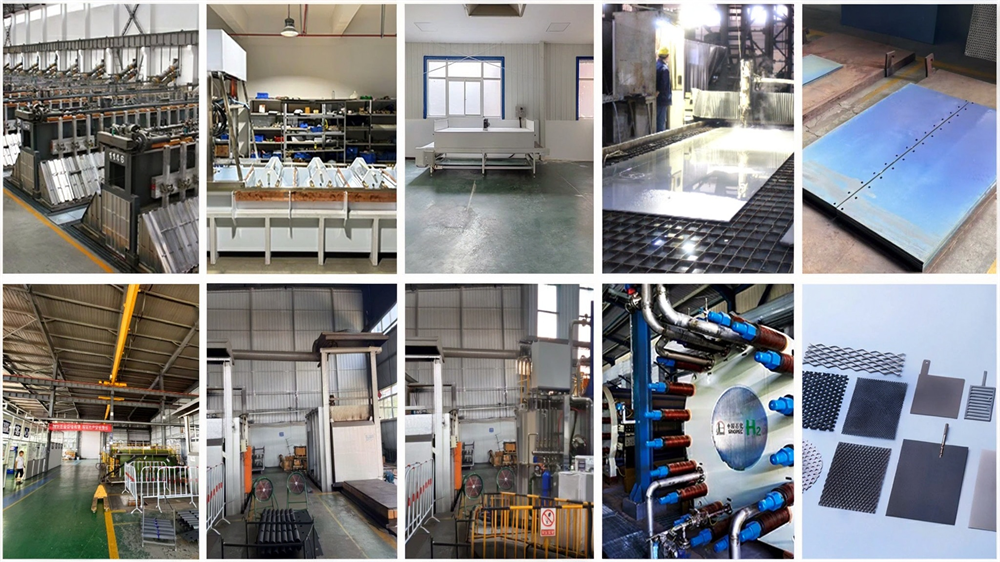
On the tour you will see that chemistry map against real work in progress: Ru-Ir coated titanium electrodes for seawater electrochlorination, platinized titanium electrodes for plating and ionized water, and lead dioxide coated titanium anodes for refractory organics. The substrate forms — titanium plate, sheet and mesh — are usually visible in the same area, because electrode geometry is drawn to the cell it has to fit rather than picked from a catalogue.
Stage 4: thermal decomposition and sintering — turning a salt into an electroactive oxide
Each coating pass is thermally decomposed: the precursor is converted to the oxide, and the layer is built up pass by pass until the designed loading is reached. Temperature and time control per pass are what make the difference between a coating that is chemically correct and one that is mechanically sound.
This is the stage that explains why loading is quoted in g/m² and not in passes. Different precursor concentrations and different pass counts can reach the same loading; the number that travels with the product is the mass per area, because that is the figure that converts to ampere-hours.
Ask what happens to a batch that comes out of the furnace at the wrong loading. The defensible answer is that it is adjusted, re-tested or rejected against the batch record — not shipped because it is visually indistinguishable.
Stage 5: batch verification — the checks that cannot be done by eye
Coated electrodes fail for reasons that are invisible from outside: insufficient loading, poor adhesion at the interface, or contamination inside the oxide layer. The testing area is therefore the most informative stop on the tour, and the place where a tour turns into an audit.
| Check | Method | What it proves | Evidence to ask for |
|---|
| Substrate conformity | ASTM B338 Grade 1–2 (tube); ASTM B265 Grade 1 (sheet, mesh) | The titanium is the specified grade and chemistry, not a substitute | Mill certificate linked to the batch record |
| Coating loading | Mass of noble metal per unit of coated area, in g/m² | Capacity — and therefore service life — matches the quotation | Loading figure stated on the certificate, with the test method |
| Coating adhesion | 180° bend over a defined mandrel; no spalling permitted | The oxide is bonded to the substrate rather than sitting on it | Bend result on a coupon from your batch |
| Accelerated life | NACE TM0108 for impressed-current anodes; ISO 19097 for mixed-metal-oxide anodes in soils, waters and concrete | Service life is demonstrated at high current density before shipment | The standard, the current density, and the result |
| Coating integrity | X-ray inspection of the coated surface | No bare patches, skips or inclusions in the active layer | X-ray images for the batch, not a sample photo
Two details matter more than the rest. The tests are run on coupons from the batch, not on a qualification sample kept in a drawer — a golden sample proves nothing about the electrodes on your pallet. And the life figure is quoted together with the current density it was measured at, so that coating capacity in ampere-hours per square metre can be divided by the charge the anode will pass each year. A life claim in years alone is a sales estimate, not a specification; the arithmetic behind it is set out in what determines the service life of a titanium anode. |
Stage 6: cell assembly and re-coating — where the electrode meets the plant
An electrode that is correct on the bench can still fail in a cell, because the cell decides current distribution, flow regime, temperature rise and gas removal. That is why cell assembly sits in the same plant as coating rather than in a separate workshop: tubular cells for electrochemical wastewater treatment, swirl-electrolysis cells built to raise mass transfer at the electrode surface, and on-site sodium hypochlorite packages where the electrode stack, brine loop and degassing arrangement are designed together.
The last stop is the re-coating line, and it is the most honest data an electrode manufacturer ever gets. The titanium substrate outlives its coating by a wide margin; when an anode reaches end of life the failure is almost always coating loss at the operating current density, not damage to the titanium beneath it. Returned anodes are inspected and accepted or rejected on substrate condition, stripped, re-prepared, re-coated at the loading required for the next service life, and verified on coupons from the batch.
What the returned anodes say feeds the next design. Coating loss concentrated at edges points to current distribution; uniform thinning points to an over-driven cell; blistering points to a cathodic excursion or a power-cycling pattern; blinding under a scale layer points to water chemistry nobody modelled. A supplier who never sees a failed anode cannot tell you why one failed — which is a question worth asking while you are standing on the line.
What a tour cannot tell you — and how to close the gap
A factory visit proves that process capability exists. It does not prove the performance of the electrodes you will receive. Three things close that gap, and all three are documents rather than impressions:
- The batch test report — loading, adhesion, accelerated-life result and X-ray record for the batch that carries your order number.
- The current-density basis — the design current density and chloride level behind the quoted life, so the figure can be recalculated independently.
- Third-party testing — available on request, and worth specifying in the purchase order when the duty is critical or the electrode is large.
None of these can be replaced by a photograph of a production line, however impressive. The most useful thing a tour does is tell you which of these documents the supplier is actually able to produce.
Six questions to ask at any anode factory
| Question | Why it matters | What a good answer sounds like |
|---|
| What is the coating loading, in g/m²? | It is the only figure that converts to ampere-hours and therefore to life | A number, with the test method and the loading tolerance |
| Which standard was the life test run to, and can I see the batch report? | Separates a verified claim from a marketing claim | NACE TM0108 or ISO 19097, plus the report for your batch |
| At what current density does the stated life apply? | The same electrode is a 5-year or a 20-year product depending on loading and current | A design current density and a chloride level, stated with the life figure |
| Who signs the technical specification? | Tells you whether you are talking to sales or to materials engineering | An engineer who will discuss adhesion and sintering, not a price list |
| What happens to a batch that fails testing? | Reveals whether the test result is used or displayed | A re-test, adjustment or rejection route against the batch record |
| What do you do with an anode that fails in service? | Failure analysis is where the next design comes from | Inspection, sectioning and a written finding — not a silent replacement |
Arranging a visit
Visits to the Xi'an plant are arranged in advance, because the useful version of a factory tour is built around your application rather than around a fixed route. Four things make the difference:
- Send the process data first. Electrolyte composition, chloride level, pH, temperature, required current density, target service life and the cell or tank geometry you have to fit.
- Say which stages you want to examine. Coating and sintering, batch verification, cell assembly and the re-coating line each answer a different question; a visit can be weighted towards the one that matters for your project.
- Send attendee names and company details in advance so that site access can be arranged, and check in advance if you intend to bring a camera.
- Bring the drawings, or the failed anode. A specification discussion is far more productive in front of the actual part, and a failed electrode can usually be assessed on the spot.
Technical enquiries are answered by engineers. To request a visit, use the contact form and state the application and the stages you want to see; standard specification questions are covered in the specification FAQ.
FAQ
What can I see on a titanium anode factory tour?
Six production stages: substrate intake and mill-certificate control, surface preparation, coating application, thermal decomposition and sintering, batch verification (loading, adhesion, accelerated life, X-ray), and cell assembly. At AUE the re-coating line for service-retired anodes is included, because the inspection of returned electrodes is where failure analysis happens.
How long does a factory visit take?
The route follows the six stages above; how long it takes depends on how many of them you want to examine in detail and whether you include a technical review of your own specification. The agenda is agreed when the visit is booked, so that the engineer handling your application is on site for the parts you care about.
Can I see the test reports for my own batch?
Yes. A coated anode batch is released against its batch record, which carries the substrate certificate, the coating loading, the adhesion result, the accelerated-life result and the X-ray record. Ask for that record rather than a generic certificate of conformity, and check that the loading is stated in g/m² and the life test names its standard and current density.
Is third-party inspection or testing available?
Third-party testing is available on request and is worth writing into the purchase order for critical duty or for large electrodes. If you want a witness test before shipment, say so when booking the visit so that it can be scheduled against the batch.
Where is the factory, and how do I get there?
The plant is at No. 1688 Hanhui Avenue, Qinhan New City, Xixian New Area, Shaanxi, China. The commercial office is at 19th Floor, Building 4, Taihua Jinmao International, High-tech Zone, Xi'an. Xi'an Xianyang International Airport is the usual arrival point. The agenda is agreed in advance and can include a technical meeting at the plant as well as the walk-through.
Can I visit before I am a customer?
Yes. Supplier evaluation is one of the main reasons buyers visit, and the visit is structured around the questions in the table above rather than around a sales presentation. Bring the application data and the questions you would ask any supplier.
Do you re-coat anodes that were made elsewhere?
Yes, provided the titanium substrate is still within tolerance. The substrate is inspected and accepted or rejected before anything is stripped, then the spent coating is removed, the surface re-prepared, a new coating applied at the loading required for the next service life, and the batch verified by adhesion and accelerated-life testing — the same test basis as a new electrode.
Can the visit include cell design for my application?
Yes. Electrode and cell are designed together, because the cell sets current distribution, mass transfer and gas removal, all of which act on coating life. Custom cell design — tubular cells, swirl-electrolysis cells and on-site hypochlorite packages — is done in-house, so a visit can include the geometry that would apply to your process.
Further reading
Contact
Xi'an AUE Technology Co., Ltd.
Office: 19th Floor, Building 4, Taihua Jinmao International, High-tech Zone, Xi'an, Shaanxi, China
Factory: No. 1688 Hanhui Avenue, Qinhan New City, Xixian New Area, Shaanxi, China
Email: Bart@anodeae.com · Phone: +86 188 2169 2388
Technical enquiries are answered by engineers. Send process data, drawings or a failed anode, and we will respond with a coating recommendation and the life basis behind it.